K-LINE K5449 Hudson York Central Tender
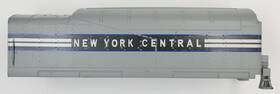
( Brand: K-line ), ( Manufacturer Part Number: K5449 ), ( Type: Shell ), ( Age Level: 17 Years Up )
Review K LINE Diecast Gray And Blue Hudson New York Central Tender Shell
The **K-Line K5449 Hudson York Central Tender** is a meticulously crafted, high-fidelity scale model of one of the most iconic and historically significant steam locomotive tenders in American railroading. Built to an exacting 1:87 (HO) scale, this tender replicates the robust and functional design of the **York Central Railroad s** Hudson-class locomotives, which were pivotal in the expansion and operation of the New York Central system during the early to mid-20th century. The tender itself is a study in industrial elegance, featuring a **large, cylindrical coal bunker** with a sturdy, ribbed steel construction that not only enhances its visual authenticity but also provides structural integrity for the model. The **water tank**, positioned above the coal, is detailed with precise rivet patterns, handrails, and a functional **coupling mechanism** that allows for smooth articulation with the locomotive, ensuring realistic movement and operation. The tender s **underframe** is intricately designed with **brake rigging, spring suspension, and detailed wheel sets**, including **flanged wheels** that mimic the original s robust performance on both mainline and branch-line tracks. The **ladders and handrails** are cast with fine detail, while the **coupling knuckles** and **buffer beams** are crafted to match the era s engineering standards, complete with **adjustable draft gear** for precise alignment with the locomotive.
The **K-Line K5449** stands out for its **high-quality materials**, including **die-cast metal components** for the wheels, axles, and underframe, which contribute to its smooth rolling action and durability. The **coal bunker** is filled with **realistic, textured coal** that can be replenished, while the **water tank** features a **clear, removable cover** that allows for easy refilling and maintenance. The tender s **paint scheme** is a faithful reproduction of the **York Central Railroad s** classic livery, often featuring a **dark green or black base with yellow or white accents**, though variations in livery can be achieved with optional decals and paint kits. The **numbering and lettering** are crisply applied, ensuring clarity and authenticity, while the **smoke stack and chimney** are designed to complement the locomotive it pairs with, often featuring a **black or dark gray finish** with subtle detailing to enhance its industrial charm.
Beyond its aesthetic and functional accuracy, the **K-Line K5449** is engineered for **ease of use and versatility**, making it an excellent addition to any model railroad layout, whether for static display or dynamic operation. The **HO-scale proportions** allow it to seamlessly integrate with a wide range of locomotives and rolling stock, from classic steam engines to modern diesel units. Its **durable construction** ensures longevity, while the **attention to historical detail** such as the **correctly proportioned dimensions, authentic hardware, and period-accurate features** makes it a prized possession for collectors and enthusiasts alike. Whether placed alongside a **Hudson-class locomotive** in a meticulously laid-out New York Central yard or displayed as a standalone centerpiece, the **K-Line K5449 Hudson York Central Tender** embodies the strength, functionality, and timeless appeal of early 20th-century American railroading.
**Pros and Cons of Buying a K-Line K5449 Hudson York Central Tender**
The K-Line K5449 Hudson York Central Tender is a classic steam locomotive tender, originally built for the New York Central Railroad. While these tenders are highly sought after by collectors and enthusiasts, purchasing one comes with distinct advantages and challenges.
### **Pros**
1. **Historical Significance and Heritage**
The K5449 tender was part of the New York Central Railroad s fleet, a major and influential railroad in American history. Owning a piece of this heritage provides a tangible connection to the golden age of railroading. The York Central designation further adds to its historical value, as it was part of the pre-Pennsylvania Railroad merger era.
2. **Collectible Value and Investment Potential**
Well-preserved Hudson-era tenders, especially those with documented histories, can appreciate in value over time. The K5449, depending on its condition and provenance, may be a desirable acquisition for museums, private collectors, or railroads seeking to restore authenticity to their fleets. Some tenders have sold for significant sums at auctions, particularly if they are rare or have unique features.
3. **Potential for Restoration and Display**
If the tender is in need of restoration, this presents an opportunity for hands-on work with a skilled team or as a personal project. Restoring a tender can be a rewarding process, and the result could be a stunning exhibit piece for a museum, park, or private collection. The York Central designation may attract enthusiasts interested in pre-consolidation-era railroads.
4. **Unique Aesthetic and Engineering Appeal**
The K-Line tender design is iconic, featuring large coal bins and water tanks optimized for long-distance hauling. The robust construction and distinctive styling make it visually striking, appealing to those who appreciate industrial heritage and mechanical craftsmanship. The tender s size and scale also make it a focal point in any display setting.
5. **Opportunities for Educational and Touristic Use**
A restored tender could serve as an educational tool for schools, historical societies, or tourist attractions. Railroads or museums that operate steam locomotives often use tenders as part of their exhibits, and a well-maintained K5449 could enhance their authenticity. Additionally, tenders can be featured in special events, such as steam festivals or heritage railroads, generating interest and potential revenue.
6. **Potential for Operational Use (If Restored)**
While tenders themselves are not self-propelled, they can be coupled to operational steam locomotives for hauling coal and water during runs. Some heritage railroads or private owners use tenders in this capacity, adding to the practical utility of the purchase beyond static display.
---
### **Cons**
1. **High Cost of Acquisition**
The price of a K-Line K5449 tender can be prohibitively expensive, especially if it is in good condition or has a well-documented history. Prices can range from tens of thousands to over a hundred thousand dollars, depending on factors such as rarity, provenance, and restoration status. This makes it a significant financial commitment, even for serious collectors.
2. **Maintenance and Restoration Challenges**
Tenders, like all vintage railroad equipment, require extensive maintenance to prevent deterioration. Rust, structural weaknesses, and mechanical wear are common issues that may necessitate professional restoration work. The cost of labor, materials, and expertise can be substantial, particularly if the tender has been neglected for decades. Some tenders may also require specialized knowledge to restore correctly, adding to the complexity and expense.
3. **Storage and Transportation Logistics**
Tenders are large and heavy, often weighing tens of thousands of pounds. Storing one securely whether in a climate-controlled facility, a museum, or a private yard requires significant space and infrastructure. Transportation, even for short distances, can be challenging due to their size and weight. Special permits and equipment (such as low-bed trailers) may be needed, adding to the logistical and financial burden.
4. **Limited Operational Utility**
Unlike locomotives, tenders are not self-powered and cannot operate independently. Their primary function is to carry coal and water, which means they must be coupled to a working locomotive to be useful. If the owner does not have access to a compatible steam engine or a heritage railroad, the tender s practical value is limited to display or static exhibition.
5. **Risk of Further Depreciation**
While some tenders appreciate in value, others may depreciate if they are not well-maintained or if the market for vintage railroad equipment shifts. The collectible market can be unpredictable, and without a guaranteed buyer or restoration plan, the tender may lose value over time. Additionally, if the tender is not restored to museum-quality standards, its resale value could be limited.
6. **Legal and Ownership Considerations**
Purchasing a tender may involve navigating complex legal issues, such as title transfers, historical documentation, or restrictions on movement across state or international borders. Some tenders may have liens or unresolved financial claims, which could complicate ownership. Additionally, transporting a tender across public roads may require special permits or inspections, depending on local regulations.
7. **Time and Commitment Requirements**
Owning a tender is not a passive investment. It demands ongoing attention, whether for restoration, maintenance, or preservation. For those without the time or resources to manage this, the tender could become a burden rather than an asset. Even if outsourced to professionals, the costs and coordination can be overwhelming.
8. **Market Saturation and Competition**
The market for vintage railroad equipment, including tenders, is competitive. There are numerous collectors, museums, and railroads vying for similar pieces, which can drive up prices and make it difficult to find a unique or rare tender at a reasonable cost. Additionally, some tenders may be duplicated or replicated, reducing their exclusivity and value.
---
### **Conclusion**
Buying a K-Line K5449 Hudson York Central tender is a significant decision that offers both profound historical and aesthetic rewards, as well as substantial financial and logistical challenges. For the right buyer someone with deep passion for railroad history, the resources to restore or maintain the tender, and a clear plan for its use or display the purchase can be an incredibly fulfilling and valuable investment. However, for those without the expertise, budget, or commitment to handle the complexities of ownership, the risks and costs may outweigh the benefits.
The tender s value lies not just in its material worth but in its story, its role in railroad history, and its potential to inspire or educate. If you are considering this purchase, it is essential to conduct thorough research, consult with experts in railroad preservation, and carefully assess your long-term goals for the tender. Whether you intend to restore it for display, use it in a heritage railroad setting, or simply collect it as a piece of history, the decision should be made with full awareness of the responsibilities and rewards involved.
---
### **Recommendation**
If you are seriously considering purchasing a K-Line K5449 Hudson York Central tender, follow these steps to maximize the likelihood of a successful outcome:
1. **Define Your Goals Clearly**
Determine whether you want the tender for display, restoration, operational use, or investment. Your goals will shape your budget, approach, and expectations. If you lack the expertise to restore it yourself, partner with a reputable railroad preservation organization or a professional restorer.
2. **Assess Your Budget and Resources**
Factor in not only the purchase price but also the costs of restoration, storage, transportation, insurance, and ongoing maintenance. Ensure you have the financial stability to cover these expenses without strain. If funds are limited, consider starting with a less expensive but still historically significant tender to gain experience.
3. **Verify the Tender s Condition and History**
Before purchasing, conduct a thorough inspection or hire an expert to evaluate the tender s structural integrity, mechanical condition, and historical documentation. Look for signs of rust, corrosion, or prior damage that may require extensive work. A well-documented tender with a clear provenance will be more valuable and easier to restore.
4. **Explore Restoration Options**
If the tender requires restoration, research the best approaches. Some tenders may benefit from partial restoration (e.g., focusing on cosmetic details while preserving original components), while others may need full reconstruction. Work with restorers who specialize in railroad equipment and have experience with Hudson-era tenders.
5. **Consider Alternative Ownership Models**
If full ownership is not feasible, explore other avenues such as leasing, partnering with a museum or railroad, or contributing to a restoration project as part of a collective effort. This can reduce your financial risk while still allowing you to play a role in preserving the tender.
6. **Plan for Long-Term Care**
Develop a plan for the tender s storage, insurance, and future use. If you do not have a display space or operational railroad, research museums or historical societies that might be interested in housing or showcasing it. Ensure you have a backup plan in case your circumstances change.
7. **Consult with Experts and Communities**
Engage with railroad preservation groups, historians, and collectors to gain insights and advice. Organizations such as the National Railway Historical Society, local heritage railroads, or online forums dedicated to steam locomotives can provide valuable guidance. Their collective knowledge can help you avoid common pitfalls and make informed decisions.
8. **Proceed with Caution and Realistic Expectations**
Be prepared for the possibility that the tender may not appreciate in value as hoped, or that restoration challenges may arise. While the prospect of owning a piece of railroad history is exciting, it is crucial to approach the purchase with realistic expectations about the time, effort, and cost involved.
In summary, the K-Line
Details:
Train Product Id: 12813503. Model Number: K5449. We'll do our absolute best to make you happy. Operational Status: Functional This part is in workable condition.
Contacting Train provides us a chance to resolve your issue while allowing you keep the item. Variation: Used. Condition: Excellent C-7Trainz does not provide grading for parts. Economy Shipping.
Manufacturer: K-Line. Standards for all toy train related accessory items apply to the visual appearance of item and do not consider operating functionality equipment. Please see pictures for more details.
part #: k5449 price
- $50.00
specifications oscaletraini:
- brand: K-line
- mpn: K5449
- type: Shell
- age level: 17 Years Up
seller oscaletraini:
- city: Flowery Branch, Georgia
- # reviews: 757247
- rating: 99.8%
payments oscaletraini:
- wallet: Google-pay
- other
- credit card: Diners-club
offer oscaletraini:
- started: May 18, 2026
- sold: 0
- availability: In Stock
- options: Ship-to-home
- quantity: 1
returns oscaletraini:
- paid by: Seller
- time: 30 Days
- method: Money back
- policy: Returns Accepted
shipping oscaletraini:
- service: Economy, Standard
- type: Fixed
- cost: $15.26
- transit: 4-9 Days
- class: Economy, Standard
general oscaletraini:
- Railroads Trains > Parts Accessories > Parts Spares
- condition: Used
K-line K5449 Is Similar To:
- 040369810926 K-line New In Box (29.6% similar) This is for a new in package train car from an adult collector. I will combine shipping on multiple cars. This is for a new in box k line heavy hauler Atlanta 1996 Olympics...(February 15th, 2018)
- 2078 Weaver Ultra Line Acf Centerflow Covered Hopper New York Central (38.1% similar) Offer template created for CAVY23 raggedy dreams...(May 28th, 2018)
- 22455 K-line 6 New Mexico (29.1% similar) Note: some items can't be combined due to weight and size. Note: any warranty is subject specific timelines and other parameters set forth by the manufacturer. Minimum curve: O-31DIMENSIONS: length : 14 most recent catalog: K-line by Lionel 2009 vol. Do not throw out the packaging or contents. ...(January 22nd, 2018)
- 2412-9992 K-line New In Box (30.5% similar) Engine features test run dual vertical motors with brass flywheels position reversing unit Lionel rail sounds digital sound train master command control operating metal couplets detailed die cast trucks chassis separate handrails ladders fuel tank pilot running lights headlights ditch illuminated ...(July 9th, 2017)
- 2426-0001 K-line New In Box (28.6% similar) Set contains RS-3 rail sounds DMCA battalion car flat w cars special ops command searchlight tank off smoking caboose engine features o scale 1: dual vertical motors equipped with flywheels operating smoke unit on-off switch position reversing metal couplets die cast trucks accurately detailed ...(August 5th, 2017)
- 25701 2570-3600 K-line New In (26.2% similar) A-a powered units b unit non has smoke engine features inches long o scale 1: dual motors on a wheel drive all position electronic reversing linking die cast trucks and wheels Audra-grip pilot couplets operating front couplet lighted cab interior metal chassis fuel tank w underside detail headlight ...(July 5th, 2017)
- 30-1264-1 Mth Railking Atlantic Coast Line Northern Steam Engine Tender Shell (45.2% similar) See photo for item and condition. See photos shells FEATURE:4-8-4 northern steam engine tender die-cast ACLU cab no. Math o railing Atlantic coast line northern steam engine tender shell 1803ROADNAME: line product item number: 1PRODUCT line: - die-cast boiler and body colorful paint scheme metal ...(November 5th, 2018)
- 3250 Williams New Box Car Scale Wal Crown Edition Line (27.3% similar) All couplets are in like new condition. Observe pictures to determine if this item is acceptable for your train layout. Features knuckle couplets, fast angle wheels, needle point axles, die cast metal trucks, sides and operating couplets accurate railroad paint scheme. Williams new haven-black box ...(November 2nd, 2018)
- 3400-98dc 3270-0002 3270-0002 K-line New In (24.8% similar) Engine has been test run features train master command control Lionel rail sounds traction tires operating headlight back-up light puffing smoke firebox glow all metal gears detailed coal load electrical on rear of tender interior operates O-31 track original shipping box included...(August 5th, 2017)
- 6-19536 Lionel Soo Line Rea Refrigerator Car New In Box Reefer (31.4% similar) SOP line refrigerator car. O gauge scale...(March 24th, 2018)
- 6-21239 Lionel Line New Ringling Brothers Flat Freight Car 023922212399 (22.8% similar) You get the one see in pictures. Factory sealed packaging. I only ship to the us. If you are buying on more than one item I have listed at a time please let me know. See pictures for all details. Never been used. I will combine shipping on most items if possible except large flat rate boxes...(April 6th, 2019)
