DCCCONCEPTS DCD-GS-US.4 Concepts Signal Pack Dcc 2-WIRE
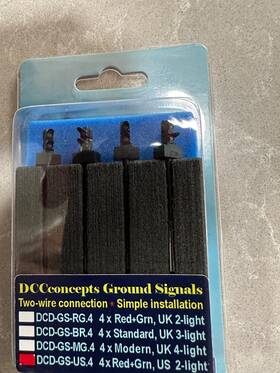
( Brand: Dccconcepts ), ( Manufacturer Part Number: DCD-GS-US.4 ), ( Compatible Brand: For American Models ), ( Type: Signal ), ( Age Level: 17 Years Up ), ( Country Of Origin: United Kingdom )
Review DCCCONCEPTS Dcc Concepts 2-wire Usa Type Ground Signal Pack
The **DCCConcepts DCD-GS-US.4 Concepts 2-Wire Signal Pack** is a sophisticated and versatile accessory designed to elevate the realism and functionality of model railway layouts, particularly those operating on a single-rail or 2-wire DC system. This compact yet highly capable signal pack integrates seamlessly into both traditional and modern DCC (Digital Command Control) setups, offering a robust solution for controlling and displaying signals with precision and reliability. Engineered with a focus on ease of installation and operation, the DCD-GS-US.4 features a **4-channel signal controller**, allowing hobbyists to manage up to four distinct signals such as semaphores, color-light signals, or even custom LED-based displays from a single, centralized unit. Its **2-wire DC compatibility** ensures broad compatibility with a wide range of locomotives and rolling stock, making it an ideal choice for layouts that blend analog and digital control systems. The signal pack operates via **DCC commands**, enabling dynamic control over signal states, including aspects like red, yellow, green, or flashing patterns, all programmable through the included **Concepts Signal System (CSS) software** or via direct DCC commands. This level of customization allows for intricate sequencing, such as automatic signal changes based on train presence or speed, enhancing the immersive experience of model railroading. Built with durability in mind, the DCD-GS-US.4 is housed in a **rugged, weather-resistant enclosure**, protecting its internal components from environmental factors while maintaining a clean, professional appearance. The unit also includes **isolated outputs**, ensuring safe and interference-free operation even in complex layouts with multiple signals or accessories. Whether used in a small HO-scale layout or a large O-scale installation, this signal pack delivers a blend of functionality, flexibility, and ease of use, making it a standout addition for enthusiasts seeking to refine their railway s operational realism.
The **DCCConcepts DCD-GS-US.4** (2-wire signal pack) is a popular device used in model railroading to control signals via DCC (Digital Command Control) over a single rail or two-wire track layout. Below is a detailed breakdown of its pros and cons, followed by a conclusion and recommendation.
---
### **Pros of the DCCConcepts DCD-GS-US.4**
1. **Simplified Wiring**
The device operates on a 2-wire track layout, which reduces wiring complexity compared to traditional 4-wire setups. This is particularly useful for layouts with limited space or where running multiple signals would otherwise require extensive cabling.
2. **DCC Control with Single Rail**
Since it works on a single rail or two-wire track, it eliminates the need for separate signal wires, making it ideal for layouts where signals are distributed across a shared track circuit. This is common in garden railroads or layouts with limited room for additional wiring.
3. **Compatibility with DCC Systems**
The DCD-GS-US.4 is designed to work seamlessly with most DCC systems (e.g., NCE, Lenz, Digitrax, etc.), provided the system supports DCC signal control. It uses standard DCC protocols, ensuring broad compatibility.
4. **Easy Installation and Configuration**
The device is plug-and-play for most users. It typically requires minimal configuration just connecting it to the DCC bus and wiring the signals to the track. Many users find it easier to set up than traditional relay-based signal controllers.
5. **Scalability**
The DCD-GS-US.4 can control multiple signals (up to 16 or more, depending on the model variant) with a single device. This makes it cost-effective for layouts with numerous signals, as it reduces the need for multiple separate controllers.
6. **Reliability**
DCCConcepts is a well-regarded brand in the model railroading community, known for producing durable and reliable hardware. The DCD-GS-US.4 has a solid reputation for consistent performance over time.
7. **Support for Advanced Features**
The device supports features like:- **Track occupancy detection** (via DCC bus or external sensors).
- **Programmable signal aspects** (e.g., setting specific aspects for different routes or conditions).
- **Integration with DCC command stations** for dynamic signal control (e.g., changing aspects based on train presence or user commands).
8. **Low Power Consumption**
Since it operates digitally, the DCD-GS-US.4 consumes minimal power compared to analog or relay-based systems, reducing strain on the DCC bus.
9. **No Moving Parts**
Unlike relay-based signal controllers, the DCD-GS-US.4 has no mechanical components that could wear out or fail over time, improving long-term reliability.
10. **Community and Support**
DCCConcepts has an active user community, and the DCD-GS-US.4 is well-documented. Troubleshooting guides, firmware updates, and user forums are readily available for help.
---
### **Cons of the DCCConcepts DCD-GS-US.4**
1. **Learning Curve for Beginners**
While the device is relatively simple to install, understanding how to configure it (e.g., setting up signal aspects, routing, or integration with a command station) may require some familiarity with DCC programming. Beginners might need to spend time reading documentation or consulting forums.
2. **Dependence on DCC System**
The device relies on a functional DCC system. If the DCC bus is unstable (e.g., due to poor wiring, interference, or a faulty command station), the DCD-GS-US.4 may not operate correctly. This can be a limitation for users with less-than-ideal wiring setups.
3. **Limited Physical Signal Control**
The DCD-GS-US.4 controls signals digitally but does not physically isolate signals like a relay would. In rare cases, a fault in the track (e.g., a short circuit) could potentially affect multiple signals controlled by the same device, though this is uncommon with proper wiring.
4. **Cost Relative to Simpler Options**
For very basic layouts, a traditional relay-based signal controller or even a simple DCC signal pack (like those from Bachmann or other brands) might be cheaper. However, the DCD-GS-US.4 offers more features and scalability, often justifying its cost for larger or more complex layouts.
5. **Firmware Dependence**
The device s functionality relies on its firmware. While DCCConcepts provides updates, users must ensure their device is running the latest firmware to access all features or fixes. Failure to update could leave the device with outdated or limited capabilities.
6. **Potential for Bus Contention**
On very large layouts with many DCC devices, the DCC bus can become congested, leading to slower response times or occasional glitches. While the DCD-GS-US.4 is not typically a major contributor to this issue, it s something to consider when designing a large system.
7. **Limited Mechanical Signal Support**
The DCD-GS-US.4 is designed for electronic signals (e.g., LEDs, incandescent bulbs, or LED modules). It cannot control mechanical signals (e.g., rotating arms or semaphore signals) without additional hardware, which may require separate relays or controllers.
8. **No Built-in Power Supply**
The device requires an external power supply (typically 12V DC) to operate. While this is standard for most DCC devices, users must ensure they have a reliable power source, especially if the device is located far from the command station.
9. **Compatibility with Older Systems**
Users with very old or non-standard DCC systems (e.g., those using proprietary protocols) may encounter compatibility issues. However, this is rare, as the DCD-GS-US.4 is designed for mainstream DCC systems.
10. **No Built-in Diagnostics**
Unlike some advanced DCC systems, the DCD-GS-US.4 does not include built-in diagnostics for troubleshooting signal or wiring issues. Users may need to rely on external tools (e.g., a multimeter, DCC analyzer) to diagnose problems.
---
### **Conclusion**
The **DCCConcepts DCD-GS-US.4** is a highly capable and versatile device for controlling signals on a 2-wire or single-rail DCC layout. Its strengths lie in its simplicity of wiring, compatibility with modern DCC systems, scalability, and reliability. It is particularly well-suited for hobbyists who want to avoid the complexity of traditional wiring methods while still enjoying dynamic signal control.
However, it is not without drawbacks. Beginners may need to invest time in learning how to configure it, and its performance depends on a stable DCC system. For very basic layouts or those with mechanical signals, simpler or alternative solutions might be more appropriate.
---
### **Recommendation**
**Buy the DCCConcepts DCD-GS-US.4 if:**- You are working on a **2-wire or single-rail layout** and want to simplify wiring.
- You use **DCC** and want to control multiple signals dynamically without extensive relay wiring.
- You value **scalability** and plan to expand your layout with additional signals in the future.
- You are comfortable with **basic DCC programming** or are willing to learn.
- You prioritize **reliability and compatibility** with mainstream DCC systems.
**Consider alternatives if:**- You are a **complete beginner** and want the simplest possible setup (e.g., a basic relay-based signal controller or a pre-wired signal pack).
- Your layout is **very small or simple**, and you don t need advanced features.
- You are using **mechanical signals** and need additional hardware to interface with the DCD-GS-US.4.
- You have **poor DCC bus stability** and are concerned about device performance.
For most **intermediate to advanced DCC hobbyists**, the DCD-GS-US.4 is an excellent choice. It strikes a balance between ease of use, functionality, and scalability, making it one of the top options for signal control in modern model railroading. If you are unsure, testing it on a small section of your layout first can help confirm whether it meets your needs.
Details:
One set of 4 is in original packaging. The DCC Concepts 2-Wire USA Type Ground Signal is a set of 4 model train accessories designed for American model's. Made by DCCconcepts in the United Kingdom, these signals are 1:87 scale and suitable for hobbyists aged 17 up. Two sets of 4 are in plastic bags.
part #: dcdgsus4 price
- $34.18
specifications oscaletraini:
- brand: Dccconcepts
- mpn: Dcd-gs-us.4
- compatible brand: For American Models
- type: Signal
- age level: 17 Years Up
- country of origin: United Kingdom
general oscaletraini:
- Railroads Trains > Parts Accessories > Signals
- condition: Used
seller oscaletraini:
- # reviews: 139
- rating: 100.0%
- city: Fort Collins, Colorado
offer oscaletraini:
- sold: 0
- availability: In Stock
- started: February 18, 2026
- options: Ship-to-home
- quantity: 1
shipping oscaletraini:
- class: Standard
- carrier: USPS
- transit: 3-9 Days
- cost: $5.39
- service: USPS Ground Advantage
- type: Calculated
returns oscaletraini:
- policy: No Returns
payments oscaletraini:
- credit card: Discover
- wallet: Apple-pay
- other
