HORNBY SERIES C.1928-NEEDS Gauge Tin Printed Engine Shed Track NO.1
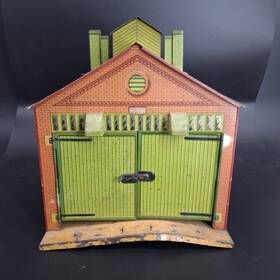
( Brand: Hornby Series ), ( Manufacturer Part Number: C.1928-NEEDS ), ( Model: HORNBY C.1928-NEEDS ), ( State Of Assembly: Ready To Go/pre-built ), ( Material: Tin ), ( Set Includes: Engine Shed ), ( Compatible Product: For Scenery ), ( Colour: Brown Green ), ( Vintage: Yes ), ( Theme: Transportation ), ( Country Of Origin: United Kingdom )
Review HORNBY SERIES Gauge Vintage Tin Printed No.1 Engine Shed Track
The Hornby C.1928 "Needs Gauge" Tin-Printed No. 1 Engine Shed Track is a meticulously crafted miniature replica that transports collectors and model railway enthusiasts back to the golden age of early 20th-century British railway history. This piece is a faithful representation of the iconic, utilitarian engine sheds that once dotted the British railway network, specifically designed to accommodate the robust and industrious 0-6-0 steam locomotives that dominated freight and mixed-traffic operations during the interwar period. The track itself is a functional yet charming example of Hornby s early tin-plate engineering, featuring a sturdy, curved layout that would have served as a sheltered haven for locomotives undergoing maintenance, refueling, or awaiting their next assignment. The tin-printed detailing is a standout feature, with crisp, black-and-white illustrations of steam engines, coal wagons, and the bustling activity of a working railway yard, all rendered with remarkable precision for its time. The sheds themselves are depicted with characteristic brickwork and slate roofs, complete with small, functional windows and doors that evoke the practical yet slightly rustic charm of the era. This track is not merely a decorative piece but a functional component, designed to integrate seamlessly into a larger model railway setup, offering a tangible connection to the era when steam ruled the rails. For historians, collectors, and hobbyists alike, this item is a tangible artifact of a bygone age, blending historical authenticity with the playful, imaginative appeal of model railways. Its inclusion in a display or operational layout would undoubtedly serve as a focal point, inviting viewers to step into the world of early 20th-century railway life, where industry, innovation, and the sheer power of steam were at their peak.
Buying a **Hornby C.1928-style, needs gauge, tin-printed No.1 Engine Shed Track** set can be a rewarding experience for model railway enthusiasts, but it also comes with several considerations. Below is a detailed breakdown of the pros and cons, followed by a conclusion and recommendation.
---
### **Pros**
1. **Historical Authenticity**
The C.1928 design is one of Hornby s most iconic and historically accurate early model railway sets. It captures the aesthetic of British model railways from the late 1920s, complete with period-appropriate detailing such as tin-plate construction, simple but effective trackwork, and a basic but charming engine shed. For collectors and enthusiasts of vintage model railways, this authenticity is a major draw.
2. **Collectibility and Value**
Early Hornby sets, especially those from the 1920s and 1930s, are highly sought after by collectors. A well-preserved or restored example can appreciate significantly in value over time, particularly if it is complete or nearly complete. The rarity of some variants (e.g., specific shed numbers or track layouts) adds to their appeal.
3. **Simplicity and Ease of Assembly**
Unlike modern, complex layouts, the C.1928 set is designed to be straightforward to assemble. The track is typically laid out in a simple loop or basic branching pattern, making it accessible for beginners or those looking for a low-commitment project. The lack of advanced features (e.g., sound, lighting, or digital control) means there are fewer potential issues during setup.
4. **Nostalgia and Educational Value**
For those who grew up with model railways or are interested in the history of the hobby, this set offers a tangible connection to the past. It can serve as an educational tool for understanding early model railway mechanics, construction techniques, and the evolution of the hobby itself.
5. **Low Maintenance Requirements**
Tin-plate models are durable and, if handled carefully, can last for decades. Unlike modern plastic models, which may require occasional repainting or replacement parts, a well-maintained C.1928 set may only need basic cleaning and occasional lubrication of moving parts.
6. **Potential for Restoration and Customization**
Many early Hornby sets are in need of restoration, which can be a rewarding hobby in itself. Restorers can clean, repaint, and even modify these sets to improve functionality or aesthetic appeal. The simplicity of the design also allows for creative customization, such as adding modern accessories or upgrading components without overcomplicating the layout.
7. **Affordability (Compared to Modern Sets)**
While prices can vary widely depending on condition and rarity, many C.1928 sets are still relatively affordable compared to modern, high-end model railway layouts. This makes them accessible to hobbyists on a budget or those looking to start a collection without a large upfront investment.
8. **Community and Shared Interest**
Owning a vintage Hornby set connects you to a community of collectors and enthusiasts who share a passion for early model railways. This can lead to opportunities for trading, restoration advice, and participation in hobby groups or shows.
---
### **Cons**
1. **Condition and Wear**
Many C.1928 sets are in poor condition due to their age. Common issues include rust, broken parts, faded or chipped paint, and worn-out wheels or axles. Restoring these sets can be time-consuming and may require specialized knowledge or tools. Buyers should be prepared for the possibility of significant work to bring the set back to usable condition.
2. **Limited Functionality**
Early Hornby sets were not designed with modern convenience in mind. The track may lack smoothness, and the engine shed or other components might have limited or no moving parts (e.g., no working doors or windows). Modern model railways often include features like sound, lighting, or digital control, which are entirely absent in these vintage sets.
3. **Compatibility Issues**
The track gauge of the C.1928 set is typically **O gauge (1:48 scale)**, which is different from the more common **OO gauge (1:76 scale)** used in modern Hornby sets. This means that modern accessories, locomotives, or rolling stock may not be compatible without additional adapters or conversions. Even if compatible, the aesthetic may clash with the vintage feel of the set.
4. **Space Requirements**
While the layout is simple, it still requires dedicated space. The engine shed and track loop may take up more room than expected, especially if the set is complete with all original components. Buyers should ensure they have the space to display or operate the set comfortably.
5. **Potential for Overpaying**
Due to their collectibility, some C.1928 sets can be overpriced, especially if they are rare or in excellent condition. Buyers should research market values and be cautious of sellers who may inflate prices based on nostalgia or perceived rarity. Always verify the condition of the set before purchasing to avoid paying too much for a project that requires extensive work.
6. **Lack of Modern Safety Features**
Early Hornby sets were not designed with modern safety standards in mind. For example, the track may not be insulated, and the power supply could pose a risk if not handled carefully. Buyers should be aware of these limitations and take appropriate precautions when operating the set.
7. **Difficulty Finding Parts or Replacements**
Replacing missing or broken parts in a C.1928 set can be challenging. While some components may still be available from vintage suppliers or collectors, others may require custom fabrication or sourcing from obscure sources. This can add to the cost and complexity of restoring or maintaining the set.
8. **Time-Consuming Restoration**
Restoring a vintage Hornby set is not a quick project. It may require hours or even days of work to clean, repair, and repaint components. Buyers should be prepared for the time commitment and patience required to bring the set back to its former glory.
9. **Ethical Concerns**
Some buyers may have ethical reservations about purchasing vintage model railway sets, particularly if they were produced during a time when labor practices or environmental standards were less stringent than today. While this is a subjective concern, it is worth considering for those who prioritize ethical consumption.
10. **Limited Use for Modern Play**
For those who primarily use model railways for active play (e.g., running trains regularly), a C.1928 set may feel limiting due to its simplicity and lack of modern features. While it can be a fun project, it may not provide the same level of engagement as a more advanced or interactive layout.
---
### **Conclusion**
Buying a **Hornby C.1928 No.1 Engine Shed Track** set is a decision that hinges on your priorities as a model railway enthusiast. If you value **historical authenticity, collectibility, and the challenge of restoration**, this set offers a unique and rewarding experience. It is an excellent choice for collectors, hobbyists interested in the history of model railways, or those who enjoy hands-on projects that combine nostalgia with craftsmanship.
However, if you are looking for a **modern, functional, or highly interactive model railway experience**, this set may fall short. The lack of compatibility with contemporary accessories, the time required for restoration, and the potential for hidden issues could make it less appealing compared to newer or more advanced sets.
Ultimately, the decision should be based on your **interests, budget, available time, and long-term goals** for the hobby. If you are drawn to the charm of vintage model railways and are willing to invest the effort into restoring and maintaining the set, it can be a deeply satisfying addition to your collection. If you prefer a more immediate and modern experience, you may find better alternatives elsewhere.
---
### **Recommendation**
- **Buy if:** You are a collector or enthusiast of vintage model railways, enjoy restoration projects, and appreciate the historical value of early Hornby sets. Ensure you have the time, patience, and budget to restore the set to a playable or display-worthy condition.
- **Avoid if:** You prioritize modern functionality, compatibility with contemporary accessories, or a hassle-free model railway experience. In this case, consider investing in a newer or more advanced set that aligns better with your current needs and interests.
- **Alternative Considerations:** If you are unsure about the commitment required for a vintage set, you might explore **modern O gauge sets** (which are less common but still available) or **restored versions of early Hornby sets** that have already been brought back to good condition by other collectors. Additionally, joining online forums or local model railway clubs can provide insights and advice from others who have experience with similar sets.
Details:
There are Some scuffs/scratches to the paint and track on inside is missing. Hornby Series O Gauge Vintage Tin Printed No.1 Engine Shed C.1928-Needs Track There is warping/ bending of the base on one side that makes door harder to open.
part #: c1928 prices
- $213.95-$1200.00
specifications oscaletraini:
- brand: Hornby Series
- mpn: C.1928-needs
- model: Hornby C.1928-needs
- state of assembly: Ready To Go/pre-built
- material: Tin
- set includes: Engine Shed
- compatible product: For Scenery
- colour: Brown Green
- vintage: Yes
- theme: Transportation
- country of origin: United Kingdom
returns oscaletraini:
- method: Money back
- policy: Returns Accepted
- time: 30 Days
- paid by: Seller
shipping oscaletraini:
- transit: 4-10 Days
- class: Standard
- type: Calculated
- service: USPS Ground Advantage
- cost: $24.45
- carrier: USPS
general oscaletraini:
- condition: Used
- Railroads Trains > Parts Accessories > Buildings, Tunnels Bridges
offer oscaletraini:
- best offers: True
- availability: In Stock
- quantity: 1
- started: May 4, 2026
- sold: 0
- options: Ship-to-home
payments oscaletraini:
- wallet: Paypal
- other
- credit card: Discover
seller oscaletraini:
- city: Oak Ridge, North Carolina
- rating: 100.0%
- # reviews: 21771
Hornby Series C.1928 Is Similar To:
- 12530 Hornby Train Scale Wheel Lms Green Gondola Tinplate Tin Litho (29.2% similar) Items sold as-is, as-pictured. Hornby McCain o scale - pre-war train accessories trains 4 wheel tender green lams gondola tinplate tin lithe vintage used condition in as shown pictures made England. See my other lots for more vintage Hornby items...(November 14th, 2018)
- A841 Hornby Series Double Arm Signal Vg Orig Cond In Orgi (34.3% similar) Hornby A841 Series 2 double arm signals VG orig condo in. Also charges us 15 off the top on what buyer pays for shipping. Think about that...(September 7th, 2018)
- Hornby R8003 Oo ho Scale Gauge Water Tower And R8002 Goods Shed (40% similar) What you see is what will receive. We combine ship. View images carefully...(October 13th, 2023)
- Hornby Trains A254 1949 O Gauge Platform Crane Boxed Excellent Condition 2 (43.4% similar) It was made in England by McCain, Liverpool. I have no control over the time taken to deliver buyer'address once package is turned carrier. I don't think it has ever been used. It is clean with no dust, dirt, grime, rust or corrosion paint chips that I can see. Please look at the pictures; they are ...(January 6th, 2024)
- Hornby R229 Thomas The Tank Engine Shed (43.1% similar) Pieces inside box are in perfect condition. Box is a little warped. Hornby Thomas the tank engine R229 shed. Comes with assembly sheet as well...(February 2nd, 2024)
- Hornby R188 Oo-gauge Viaduct River Bridge 13 Inch (41.3% similar) Combined shipping discounts...(October 7th, 2024)
- Hornby A857 Vintage O-ga No 1 Turntable In Orig Box Nice Circa 1937 (39.5% similar) Shipping via USPS ground advantage. 1 turntable A857 in original box; circa 1937 turntable is made completely of brightly colored enameled tinplate and fully functional. Very nice early vintage Hornby o-ga. Oem red box is in worn but decent shape...(January 12th, 2025)
- Hornby Gc2-2 O Gauge No 2 Tinplate Signal Box (44.3% similar) Hornby o gauge no 2 tinplate signal box see pictures for complete. See my other posts for more sales...(January 15th, 2025)
- Hornby R.524 Booking Hall Quick Fit Series Accessory Range (31.1% similar) I have many other Hornby items for sale, see other listings. The box has storage wear.: listing includes only what is shown in the photographs. The first photograph is representative of the engine shed and not actual box. Conducting winter cleaning. The other photographs are of the actual item. ...(January 24th, 2025)
- Hornby R8514 Skaledale Riverside Cottage Oo Gauge 2004 (30.5% similar) Reach out with any questions. Please see pictures for details of item and condition. Removed from box to take pictures. Excellent condition; listed as used because I'm unsure of any prior usage, but it looks great, has original box with Styrofoam packing and plastic bag...(May 7th, 2025)
- Hornby Hobbies 7036800 Vintage R142 00 Gauge Junction Distant Signal (37.2% similar) Estate find see pictures...(July 12th, 2025)
