ASSORTED BRANDS BLDG4 Ho Buildings Assembled Some Tlc
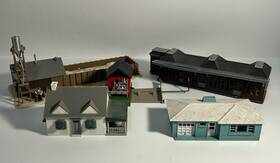
( Brand: Assorted Brands ), ( Manufacturer Part Number: BLDG4 ), ( Type: Assorted Buildings ), ( Color: Multicolor ), ( Theme: Transportation ), ( Material: Plastic ), ( Scale: 1 ), ( Set Includes: Commercial Building, House, Station ), ( Compatible Product: For Buildings ), ( Gauge: Ho ), ( Vintage: Yes )
Review ASSORTED BRANDS Ho Buildings Lot Of Plastic Multi Colors Assembled Needs Some Tlc
**BLDG4 HO Buildings Assembled with Some TLC A Thoughtfully Crafted Miniature Masterpiece**
Step into a world where meticulous craftsmanship meets charming imperfection with BLDG4 s HO-scale buildings, where each structure is assembled with care and a touch of intentional character. These aren t just generic models every detail has been thoughtfully considered to evoke the warmth and authenticity of real-world architecture, complete with subtle signs of age and use that make them feel lived-in rather than pristine. Whether it s a cozy brick row house with weathered siding, a quaint bungalow with peeling paint and a slightly crooked chimney, or a modest commercial building with a faded sign and a few missing shingles, these buildings exude personality. The assembly process ensures sturdy, well-fitted components, but the "some TLC" (tender loving care) aspect means intentional imperfections like slightly uneven joints, hand-painted details, or minor wear are preserved to enhance their realism. Perfect for modelers who appreciate the beauty of imperfection, these buildings seamlessly blend into any HO-scale layout, whether it s a bustling urban scene, a nostalgic suburban neighborhood, or a quaint rural setting. Each piece is a testament to the idea that the best models aren t flawless they re stories waiting to unfold.
Buying a **build-it-yourself (B.I.Y.) or partially assembled home** (such as a "build-it-yourself kit home" or a home requiring significant touch-up labor, like a BLDG4 HO model) can be an attractive option for those seeking affordability, customization, or a hands-on project. However, it also comes with notable risks and challenges. Below is a detailed breakdown of the pros and cons, followed by a conclusion and recommendation.
---
### **Pros of Buying a Partially Assembled or DIY Home**
1. **Cost Savings**
- These homes are often significantly cheaper than traditional site-built homes, especially if you already own the land or can secure it at a low cost. The lack of full assembly or finishing work reduces labor expenses.
- Some DIY kits include pre-cut lumber, panels, or structural components, which can be cheaper than purchasing materials separately.
2. **Customization and Personalization**
- You have full control over the design, layout, and finishes, allowing you to tailor the home to your exact needs and preferences. This is particularly useful if you want an unconventional or energy-efficient design.
- You can incorporate sustainable or modern features (e.g., solar panels, smart home tech, or open-concept layouts) without paying premium prices for custom-built homes.
3. **Hands-On Experience and Skill Development**
- Building or finishing the home yourself (or with a small team) can be a rewarding learning experience, especially if you enjoy carpentry, plumbing, electrical work, or interior design.
- It can be a fulfilling project for those who value self-sufficiency or have experience in construction.
4. **Flexibility in Location**
- Some DIY or kit homes are designed to be modular or transportable, allowing you to build in rural areas, on small lots, or even relocate the home later.
- You may have more flexibility in choosing land, including undeveloped or cheaper properties.
5. **Potential for Resale Value**
- If the home is well-designed and finished to a high standard, it could appeal to buyers looking for unique or affordable properties. However, this depends heavily on local market demand and the home s condition.
6. **Faster Construction Timeline (In Some Cases)**
- If you already have construction experience or can assemble the home quickly, you may avoid long wait times associated with traditional builders.
- Some kit homes are designed for rapid assembly, which can be advantageous if you need to move in sooner.
7. **Avoiding Builder Markups**
- Traditional builders often add significant markups to materials and labor. A DIY or partially assembled home lets you avoid these costs by sourcing materials independently.
---
### **Cons of Buying a Partially Assembled or DIY Home**
1. **Time-Consuming and Labor-Intensive**
- Assembling, finishing, and moving into the home can take **months or even years**, depending on your schedule, skill level, and the complexity of the project.
- If you lack experience, the process may take longer due to mistakes, learning curves, or the need to hire subcontractors for specialized work (e.g., electrical or plumbing).
2. **Hidden Costs and Unexpected Expenses**
- While the initial purchase price may be low, you ll incur additional costs for:- **Permits and inspections** (required in most areas, even for DIY builds).
- **Professional labor** (e.g., hiring electricians, plumbers, or contractors for critical systems).
- **Materials** (you may need to purchase additional supplies beyond what s included in the kit).
- **Tools** (renting or buying equipment like saws, drills, or scaffolding).
- **Waste disposal** (removing old materials or debris).
- These costs can easily **double or triple** the initial budget.
3. **Quality and Structural Risks**
- Poor assembly or finishing can lead to **structural weaknesses, leaks, insulation gaps, or electrical/plumbing issues**, compromising safety and livability.
- If the home is not built to code, it may fail inspections, forcing costly retrofits.
- Some DIY kits use lower-quality materials to keep costs down, which can affect durability.
4. **Limited Financing Options**
- Traditional mortgages often require proof of a completed or nearly completed home. Lenders may view DIY or partially assembled homes as higher risk, making it harder to secure financing.
- You may need to take out a **construction loan**, which has higher interest rates and stricter terms, or pay in cash.
5. **Resale Challenges**
- Buyers typically prefer move-in-ready homes, and a partially finished or unconventional home may **deter potential buyers** or require significant discounts.
- Appraisers may undervalue the home due to its incomplete or non-standard condition, making it harder to sell or refinance later.
6. **Permitting and Zoning Complications**
- Local building codes, zoning laws, and HOA restrictions may **prohibit or heavily restrict** DIY or kit homes, especially in urban or suburban areas.
- Non-compliance can result in fines, forced demolition, or legal disputes.
7. **Physical and Mental Strain**
- Construction is physically demanding, and the project can lead to **fatigue, injuries, or burnout**, especially if you re juggling work or other responsibilities.
- The stress of managing a large-scale project can be significant, particularly if unexpected problems arise.
8. **Dependence on External Help**
- Even if you re skilled, you ll likely need help with **plumbing, electrical work, roofing, or foundation issues**, which may require hiring professionals adding to costs.
- Coordination with subcontractors can be challenging, leading to delays or conflicts.
9. **Market and Economic Risks**
- If the housing market declines, the value of your partially completed home may drop, making it harder to sell or use as collateral.
- Supply chain issues or material price fluctuations can increase costs mid-project.
10. **Lack of Warranties or Builder Support**
- Unlike traditional homes, DIY or kit homes often come with **limited or no warranties**, leaving you responsible for repairs if defects arise.
- If the kit manufacturer goes out of business, you may have no recourse for defective materials.
---
### **Conclusion**
Buying a partially assembled or DIY home can be a **financially attractive and creatively fulfilling** option if you have the **time, skills, budget for hidden costs, and patience** to see it through. It s ideal for those who:
- Want a **custom, unique home** that traditional builders can t provide.
- Have **construction experience** or are willing to learn.
- Own **land at a low cost** or can secure financing for the project.
- Are prepared to **invest significant time and effort** into the process.
However, for most people especially those without construction experience, limited budgets, or tight timelines the risks **outweigh the benefits**. The **hidden costs, structural risks, financing challenges, and resale difficulties** make this path **highly speculative** and potentially stressful.
If you re considering this route, it s crucial to:- **Thoroughly research local building codes and zoning laws** before purchasing.
- **Consult a contractor or architect** to assess the feasibility and structural soundness of the home.
- **Budget for at least 2 3 times the initial purchase price** to account for materials, labor, permits, and contingencies.
- **Start with a smaller project** (e.g., a shed or tiny home) to test your skills before tackling a full house.
- **Consider a hybrid approach**: Hire professionals for critical systems (electrical, plumbing) while handling cosmetic or structural finishes yourself.
---
### **Recommendation**
**Avoid purchasing a partially assembled or DIY home unless:**1. You have **direct experience in construction** (or are willing to hire a full-time project manager).
2. You can **secure financing for the full scope of work** (including permits, labor, and materials).
3. You re **financially prepared for delays, cost overruns, and potential structural issues**.
4. You **own the land outright** or can purchase it at a price that makes the project viable.
5. You re **committed to living in the home long-term** (at least 5 10 years) to justify the investment.
**For most buyers, a traditional site-built home or a pre-fabricated/modular home (with professional assembly) is the safer and more practical choice.** If you re drawn to the idea of a DIY home but lack the resources, consider:
- **Buying a fixer-upper** (with a clear path to financing and a realistic renovation budget).
- **Investing in a tiny home or modular unit** (which can be easier to assemble and finance).
- **Partnering with a builder** who offers customization options without the full DIY burden.
Ultimately, the decision should be based on **realistic expectations, financial stability, and a clear plan to avoid common pitfalls**. Without these, the risks of a partially assembled home far outweigh the rewards.
Details:
The vintage pieces are assorted Brands and made in the USA. These buildings are ready for assembly and would need some TLC to bring them back their original condition. Perfect for model railroads and trains enthusiasts looking to add intricately detailed structures their layouts. This lot of 5 HO scale plastic buildings in various colors includes a commercial building, station, and house, all themed around transportation.
part #: bldg4 prices
- $30.50-$39.99
specifications oscaletraini:
- brand: Assorted Brands
- mpn: Bldg4
- type: Assorted Buildings
- color: Multicolor
- theme: Transportation
- material: Plastic
- scale: 1
- set includes: Commercial Building, House, Station
- compatible product: For Buildings
- gauge: Ho
- vintage: Yes
shipping oscaletraini:
- service: USPS Ground Advantage, UPS Ground, FedEx Ground / FedEx Home Delivery
- class: Standard
- carrier: USPS, UPS, FedEx
- transit: 9-13 Days
- cost: $10.41
- type: Calculated
returns oscaletraini:
- policy: No Returns
payments oscaletraini:
- credit card: Diners-club
- wallet: Paypal
- other
general oscaletraini:
- Railroads Trains > Parts Accessories > Buildings, Tunnels Bridges
- condition: Used
seller oscaletraini:
- rating: 100.0%
- # reviews: 254
- city: Las Cruces, New Mexico
offer oscaletraini:
- options: Ship-to-home
- best offers: True
- quantity: 1
- sold: 0
- started: March 3, 2026
- availability: In Stock
