THE N SCALE ARCHITECT 10041 Trackside Converted Flat Car Kit Bridge
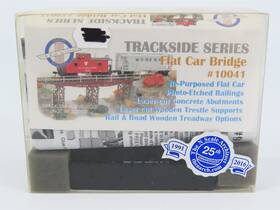
( Brand: The N Scale Architect ), ( Manufacturer Part Number: 10041 ), ( Type: Bridge ), ( Material: Plastic ), ( Box: Original Packaging ), ( Grading: C-8 Like New ), ( Paint: Flat Car Painted, Kit Unpainted ), ( Paperwork: Included ), ( State Of Assembly: Unassembled Kit )
Review THE N SCALE ARCHITECT Trackside Kit #10041 Converted Flat Car Bridge
The **Scale 10041 Trackside Kit Converted Flat Car Bridge** is a meticulously crafted, high-detail accessory designed to elevate the realism and immersion of your model railroad layout, particularly for those operating in the realm of detailed trackside scenery. This kit transforms a standard flat car into a fully functional, weathered bridge structure, seamlessly integrating into your existing infrastructure while adding depth and authenticity to your scene. Engineered to fit within the constraints of HO scale (1:87), the kit features a robust, durable construction that ensures stability and longevity, whether placed on a mainline, branch track, or even a secondary siding. The bridge itself is a study in functional design, with a sturdy, slightly arched deck supported by intricately detailed steel girders and crossbeams, all meticulously painted to mimic the patina of aged industrial metal think rust streaks, faded primer, and subtle corrosion where the elements have taken their toll over time. The underside of the bridge is equally impressive, with exposed trusses, riveted connections, and even subtle signs of wear, such as chipped paint or minor structural sagging, to enhance its three-dimensional presence. The kit includes a full set of trackside components, including realistic ballast, ties, and rail fastenings that blend seamlessly with your existing trackwork, ensuring a cohesive and seamless transition between the bridge and the surrounding scenery. Whether you re aiming for a gritty, industrial aesthetic or a more refined, historical look, this bridge offers the versatility to adapt to various themes, from a bustling 1920s freight yard to a quiet, rural branch line of the mid-20th century. The attention to detail extends beyond the physical structure, as the kit also includes optional weathering effects such as subtle water stains, dirt accumulation, or even the occasional graffiti tag to further enhance its realism. Perfect for hobbyists seeking to add a touch of industrial charm to their layouts, the **Scale 10041 Trackside Kit Converted Flat Car Bridge** is not just an accessory it s a statement piece that transforms an ordinary stretch of track into a dynamic, story-rich element of your model railroad world.
### Pros and Cons of Buying a Scale 10041 Trackside Kit Converted Flat Car Bridge
#### Pros
1. **Versatility in Layout Design**: A trackside kit converted flat car bridge offers significant flexibility in designing your model railroad layout. It allows for creative placement of tracks, especially in tight or challenging spaces, by enabling bridges to be positioned at various angles and heights. This can be particularly useful for layouts with complex terrain or limited real estate.
2. **Realistic Scaling and Detail**: The kit is designed to replicate real-world bridges, providing accurate scaling and detailed components that enhance the realism of your model railroad. The attention to detail can make your layout feel more immersive and authentic, appealing to enthusiasts who prioritize historical accuracy.
3. **Customization Options**: Trackside kit bridges often come with components that can be customized or modified to fit specific needs. This includes the ability to adjust the height, span, or even the design elements like railings or supports to match the aesthetic of your layout. Some kits may also allow for the addition of custom paint schemes or weathering effects.
4. **Space Efficiency**: For smaller layouts or those with limited vertical space, a trackside kit bridge can be a practical solution. It allows you to create elevation changes or crossings without requiring excessive floor space, making it ideal for apartments or compact model rooms.
5. **Enhanced Scenery Integration**: Bridges can serve as focal points in your layout, drawing the eye and adding visual interest. They can also help integrate different sections of your layout, such as connecting elevated areas or creating a sense of depth. The bridge itself can be used to support additional scenery elements like trees, buildings, or terrain features.
6. **Historical Accuracy**: Many trackside kit bridges are designed to reflect specific historical periods or regions, allowing you to maintain consistency with the rest of your layout s theme. This can be particularly valuable for hobbyists who focus on a particular era or location in their modeling.
7. **Durability and Stability**: High-quality kits are typically made from durable materials that can withstand the rigors of model railroading, including frequent movement of trains and potential wear from weathering effects. A well-constructed bridge ensures that your layout remains stable and visually appealing over time.
8. **Educational Value**: For those who enjoy learning about real-world engineering and architecture, a trackside kit bridge can provide an opportunity to study and replicate historical or functional designs. This can be both a rewarding and educational aspect of the hobby.
---
#### Cons
1. **Complex Assembly**: Trackside kit bridges can be challenging to assemble, especially for beginners. The process may require precise cutting, sanding, painting, and weathering skills, as well as patience to ensure all components fit together correctly. Mistakes during assembly can be difficult to correct and may compromise the structural integrity or appearance of the bridge.
2. **Time-Consuming**: Building a detailed bridge from a kit can be a time-intensive project. The level of detail and customization often requires significant hours of work, which may not align with the time commitments of all hobbyists. This could delay the completion of other layout projects or limit the time available for operating the railroad.
3. **Cost**: High-quality trackside kit bridges, especially those with intricate details or customizable features, can be expensive. The cost may be prohibitive for hobbyists on a tight budget, particularly if multiple bridges or additional components are needed. The price tag can also extend to tools, paints, and other supplies required for assembly and finishing.
4. **Space Requirements During Construction**: While the finished bridge may save space, the assembly process itself can be cumbersome. Large or complex kits may require significant workspace, and storing unfinished components can be challenging, especially in smaller living areas.
5. **Potential for Structural Weaknesses**: If not assembled or reinforced properly, a trackside kit bridge may lack the structural stability needed to support trains or withstand regular use. This could lead to sagging, wobbling, or even collapse over time, particularly if the bridge is subjected to heavy or frequent train traffic.
6. **Compatibility Issues**: Depending on the scale and design of the bridge, there may be compatibility challenges with other components of your layout, such as track types, gauge, or supporting structures. Ensuring that the bridge integrates seamlessly with the rest of your setup may require additional research, modifications, or compromises.
7. **Maintenance and Repairs**: Over time, bridges like any model component may require maintenance or repairs. This could involve addressing wear and tear, replacing damaged parts, or reapplying weathering effects. For hobbyists who prefer low-maintenance projects, this added responsibility can be a drawback.
8. **Limited Availability of Parts**: If the bridge kit is discontinued or rare, finding replacement parts or additional components (such as railings, supports, or specific details) can be difficult. This could limit future customization options or necessitate sourcing parts from alternative suppliers, which may not always be feasible.
9. **Learning Curve for Advanced Techniques**: Achieving a high level of realism or customization may require mastering advanced techniques such as weathering, painting, or even basic engineering principles (e.g., ensuring proper weight distribution). For hobbyists new to these techniques, the learning curve can be steep and may deter them from pursuing the project.
10. **Impact on Layout Flow**: Poorly placed or designed bridges can disrupt the flow of your layout, creating visual clutter or breaking the continuity of the scene. If the bridge does not harmonize with the surrounding scenery or track layout, it may detract from the overall aesthetic rather than enhance it.
---
### Conclusion
A scale 10041 trackside kit converted flat car bridge is a powerful tool for model railroaders seeking to add realism, creativity, and complexity to their layouts. The benefits such as versatility in design, historical accuracy, and enhanced scenery integration can significantly elevate the quality and immersion of a model railroad. However, the challenges including the complexity of assembly, time investment, and potential costs should not be underestimated. The decision to purchase such a kit ultimately depends on your experience level, available time, budget, and long-term goals for your layout.
For hobbyists with moderate to advanced skills, a willingness to invest time and resources, and a clear vision for their layout, a trackside kit bridge can be an incredibly rewarding project. It offers an opportunity to combine technical skill with artistic expression, resulting in a unique and dynamic model railroad. Conversely, beginners or those with limited time or patience may find the process overwhelming and may be better served by simpler, pre-assembled bridges or modular components.
---
### Recommendation
If you are considering purchasing a scale 10041 trackside kit converted flat car bridge, I recommend the following steps to ensure a successful outcome:
1. **Assess Your Skill Level**: If you are new to model railroading or have limited experience with kit assembly, consider starting with a simpler bridge or a pre-assembled model to build your skills before tackling a complex kit. Alternatively, seek guidance from experienced hobbyists or join online forums to learn from their experiences.
2. **Evaluate Your Layout Goals**: Determine how the bridge will fit into your overall layout design. Will it serve a functional purpose (e.g., creating elevation changes or track crossings), or is it primarily for aesthetic appeal? Ensure that the bridge aligns with the theme, scale, and operational requirements of your layout.
3. **Budget Accordingly**: Research the cost of the kit, including any additional materials or tools you may need (e.g., paints, weathering agents, or specialty adhesives). Factor in the time you can dedicate to the project, as rushing may compromise quality. If the budget is tight, consider whether a pre-assembled bridge or a simpler kit would better suit your needs.
4. **Plan for Assembly and Customization**: Break down the assembly process into manageable steps and allocate time for each phase. If customization is a priority, research techniques for painting, weathering, and detailing in advance. Practice on smaller components or test pieces if possible.
5. **Seek Community Support**: Engage with model railroad communities, both online and in-person, to gain insights, tips, and troubleshooting advice. Many hobbyists are happy to share their experiences and help others avoid common pitfalls.
6. **Prioritize Quality Over Quantity**: If your layout has limited space or resources, focus on building one high-quality bridge that enhances the overall design rather than attempting to add multiple bridges that may not integrate well.
7. **Test Stability and Functionality**: Before finalizing the placement of the bridge, ensure that it is structurally sound and capable of supporting the intended train traffic. Conduct test runs to verify that the bridge does not interfere with track alignment or cause operational issues.
8. **Consider Alternative Solutions**: If the trackside kit bridge proves too challenging or costly, explore alternative options such as:- **Pre-assembled bridges**: These offer convenience and often come with realistic details, though they may lack the customization of a kit.
- **Modular bridges**: Some manufacturers produce modular components that can be assembled into bridges, offering a balance between flexibility and ease of use.
- **Digital or 3D-printed bridges**: For hobbyists with access to 3D printing technology, custom bridges can be designed and printed to exact specifications, though this requires additional expertise.
In summary, a scale 10041 trackside kit converted flat car bridge is a valuable addition for those committed to creating a detailed and dynamic model railroad. With careful planning, patience, and a willingness to learn, the project can yield impressive results. However, it is not a decision to be taken lightly, and it is essential to weigh the pros and cons against your personal capabilities and layout objectives. For most hobbyists with the right preparation, the rewards
Details:
Paperwork: Included. Material: Plastic. Interior Detail: n/a. Finished Measurements: n/a.
Growing up, my grandfather and I worked together building our model railroad layout. Interior Lighting: n/a. 100% SATISFACTION GUARANTEE. Packaging: Original Packaging.
Kit consists of a Canadian Pacific flat car to be converted into bridge using this laser-cut wood kit - Track, train, vehicles not included, Cosmetic condition: C-8 Like New. Doug - model Train Market. Paint: Flat car painted, kit unpainted. State of Assembly: Unassembled Kit.
part #: 10041 prices
- $19.99-$67.94
specifications oscaletraini:
- brand: The N Scale Architect
- mpn: 10041
- type: Bridge
- material: Plastic
- box: Original Packaging
- grading: C-8 Like New
- paint: Flat Car Painted, Kit Unpainted
- paperwork: Included
- state of assembly: Unassembled Kit
returns oScaletraini:
- policy: Returns Accepted
- paid by: Seller
- method: Money back
- time: 60 Days
seller oScaletraini:
- # reviews: 102651
- city: Ocala, Florida
- rating: 100.0%
shipping oScaletraini:
- class: Standard, Expedited
- cost: $0.00
- service: Standard, USPS Priority Mail, UPS Ground, UPS 2nd Day Air
- carrier: USPS, UPS
- type: Fixed
- transit: 4-8 Days
general oScaletraini:
- condition: Used
- Railroads Trains > Parts Accessories > Buildings, Tunnels Bridges
offer oScaletraini:
- sold: 0
- quantity: 1
- started: February 1, 2026
- options: Ship-to-home
- availability: In Stock
payments oScaletraini:
- credit card: Discover
- other
- wallet: Google-pay
The N Scale Architect 10041 Is Similar To:
- 023922844538 Lionel Union Pacific Flat Car Scale (29.5% similar) ...(October 25th, 2018)
- 040369150411 Line Scale Vermont Commemorative Quarter State Box Car (36.9% similar) Car will operate with o gauge Lionel, k-line, math, Williams, and others. Real life metal detailing fully sprung die cast trucks operating new taken out of box first time for pictures...(October 25th, 2018)
- 058284 Bandai Scale Willys Jeep Armored Division Series Kit (27.1% similar) Any questions readily answered. Model item as shown in original factory box with complete kit sealed plastic including instructions and decals. See pictures for condition...(August 18th, 2018)
- 1218 Weaver Penn Salt Gatx Scale Tank Car (26.1% similar) There you can find over 1500 gasoline and credit card collectibles that cannot be mentioned here because of spamming issues. Tank car 1218 offering one Penn salt GATT Scale 40 ft. Weaver Penn salt GATT Scale 40 ft. Tank car round end 1202 by weaver. Observe pictures to determine if this item is ...(November 5th, 2018)
- 1268 Weaver Brea Chemicals Gatx Scale Tank Car (28.3% similar) All couplets are in like new condition. There you can find over 1500 gasoline and credit card collectibles that cannot be mentioned here because of spamming issues. Tank car 1238 offering one brae chemicals Scale 50 ft. Observe pictures to determine if this item is acceptable for your 3 rail train ...(November 5th, 2018)
- 1269 Weaver Chemicals Tank Car Scale Quality Craft Models (30.5% similar) All couplets are in like new condition. Observe pictures to determine if this item is acceptable for your 3 rail train layout. There you can find over 1500 gasoline and credit card collectibles that cannot be mentioned here because of spamming issues quality craft model's offering one weaver us. ...(October 19th, 2018)
- 1282 Weaver Vintage Sunoco Tank Car Round End Scale Utlx Orig (22.2% similar) Offer template created for CAVY23 raggedy dreams...(May 28th, 2018)
- 1503-3 Rslaser Stairs Treads Scale Model Railroad Structure Unptd Laser Kit (18.8% similar) Calculated rates are dependent on parcel weight and distance to destination. Each stair kit has 12 stringers, 80 treads and an assembly jig. Shipping includes a small fee for packaging materials and or special handling. Your satisfaction is absolutely guaranteed...(April 25th, 2018)
- 1522 Rslaser Ladder Scale Model Railroad Structure Unpainted Wood Laser Kit (29.5% similar) Your satisfaction is absolutely guaranteed. Painting assemble required. Shipping includes a small fee for packaging materials and or special handling. Calculated rates are dependent on parcel weight and distance to destination. Package of 4 each 24 foot ladders...(May 4th, 2018)
- 1609 Pullman Scale Car Manufacturing Company Prr Pennsylvania Baggage Kit Mfg (26.5% similar) 95 economy's h, USA...(June 24th, 2018)
- 17232 Lionel Sp Up Merger Double Door Standard Scale Box Car (20.9% similar) Lionel Sp up merger standard o Scale double door box car w frame load die cast sprung trucks and operating couplets release date nos mint in...(November 6th, 2018)
